Designing the Shift from RPA to Process Orchestration
A strategic UX initiative to unify five separate editors into a more connected platform experience. The work helped support Automation Anywhere's shift from an RPA-first story toward process orchestration, and later APA.
Role
Lead UX Designer → Principal UX Designer
Timeline
Planned 6 months · Extended to ~1.5 years
Team
Led with 2 junior designers
Stakeholders
~30 cross-functional partners
Scope
Stakeholder breakdown
30+
Total stakeholders
3
Product managers
13
Developers
3
Architects
2
DesignOps
2
Other designers
8
SDETs
1
Program manager
The challenge
The problem
Five editors had been built by different teams over time. Each had its own patterns, components, and assumptions about the right experience. There was little consistency, no meaningful navigation between them, and no connected end-to-end journey.
Strategic context
Why it mattered
Automation Anywhere was not being recognized by analysts such as Gartner as a process orchestration platform, despite having the relevant tools. A more unified experience was needed to support a broader product and market shift from RPA to process orchestration, and later APA.
Contribution & process
How I led the work
 01
01Mapped the fragmented experience
Identified where five independent editors broke the end-to-end journey through inconsistent patterns, components, and navigation.
 02
02Reframed the challenge at a platform level
Shifted the conversation from improving separate editors to designing a connected process orchestration experience.
 03
03Built alignment across teams
Brought together ~30 cross-functional stakeholders around a shared direction despite differing priorities and strong team opinions.
 04
04Defined the experience vision
Created the overall UX direction for a more connected platform and a clearer orchestration story.
 05
05Shaped the design architecture
Defined how the editors would connect, where consistency was needed, and how the end-to-end journey should work.
 06
06Drove key experience decisions
Led the design decisions needed to turn separate tools into a more coherent platform experience.
 07
07Supported execution and team growth
Worked through technical complexity and dependencies while mentoring 2 junior designers contributing to the initiative.
Complexity
Why it was hard
- Five independently built editors, each with its own conventions
- Technical debt and high implementation complexity
- Strong opinions across teams with different priorities
- Heavy coordination across multiple product areas simultaneously
Results
Outcomes
- Helped reshape the platform into a more connected, coherent experience
- Supported Automation Anywhere's stronger industry recognition, including Gartner BOAT Visionary and IDP Leader status
- Created a stronger foundation for the product's evolution into APA
- Actively being enhanced — one of the major investment themes this year
By the numbers
Impact metrics
823
Customers onboarded within 3 months of release
58%
Increase in processes created
Visuals
Before & after
Drag the handle to compare.
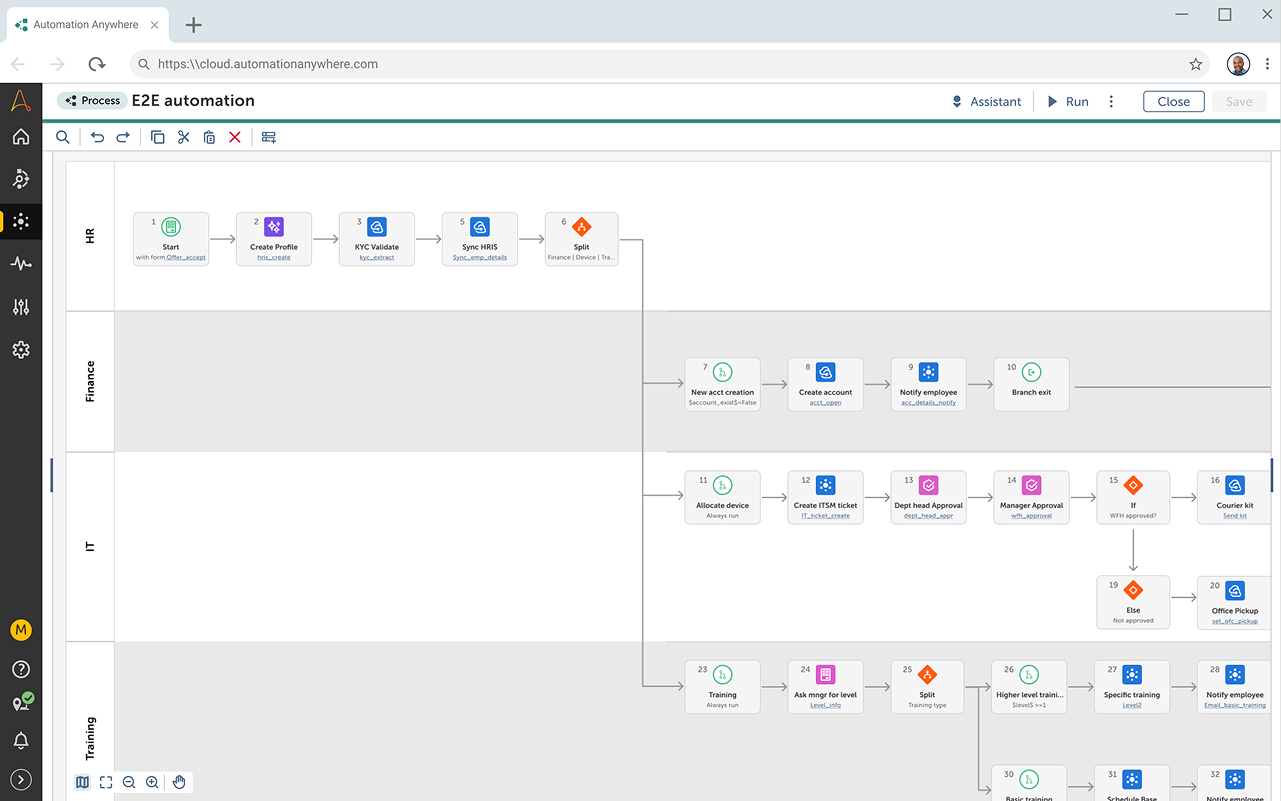
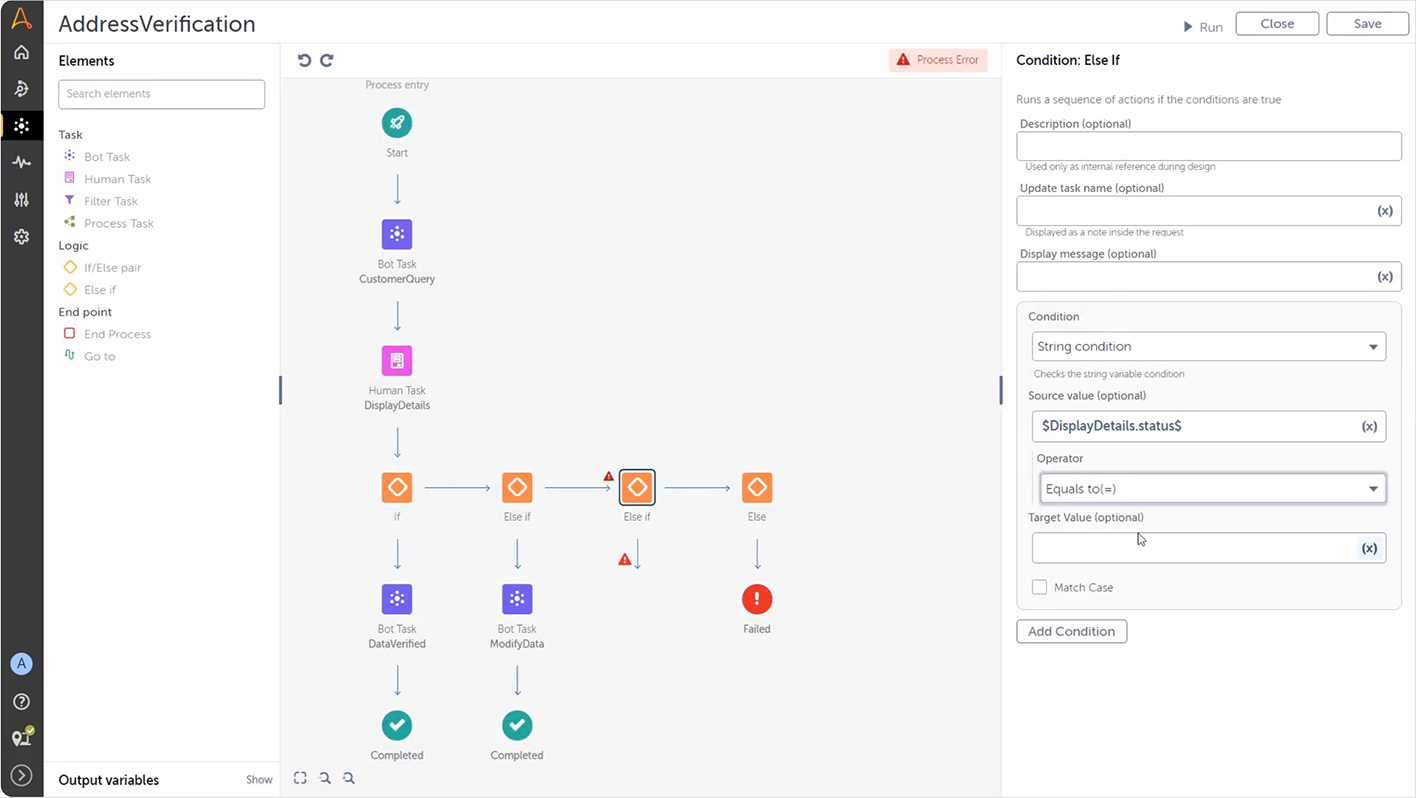
Shipped
Few feature highlights
Flexible movement
Made it easier to rearrange steps and adapt flows without rebuilding the process.
Quick add
Helped users add new steps faster directly within the flow.
Swimlanes
Improved clarity by organizing actions, roles, or stages into distinct visual lanes.
Parallel processing
Enabled multiple actions to run side by side within the same workflow.
Easy navigation
Connected previously separate tools so users could move across editors more seamlessly as part of one end-to-end journey.
Bulk actions
Reduced repetitive effort by letting users update multiple items at once.
Minimap
Made it easier to navigate and stay oriented within large, complex process flows.
Reflections and next steps
What could have been better
More up-front alignment on shared patterns, technical feasibility, and success metrics could have reduced downstream complexity.
What I'd push further
I'd focus next on deepening consistency across editors, improving measurement after launch, and simplifying adoption of shared patterns across teams.
What this unlocks next
This foundation creates room for a more intelligent and scalable orchestration experience as the platform continues evolving into APA.
End of case study